
Is your man (or woman) the type to day-dream about the glories of the Roman empire? Apparently, 4-8% of American men think about the Roman period of rule most days, so, you know, it’s not unlikely you know someone who’s obsessed with Gladiator (https://yougov.com/en-us/articles/47481-men-women-thinking-about-the-roman-empire-poll). Or maybe you’ve imagined yourself cosplaying in a toga and eating pickled flamingo tongues while lying upon a couch, listening to philosophers go on about the futility of life? Well, have I got great news for you! Portugal has the perfect festival for you – the Braga Romana.
Before I continue, a quick disclosure: I love the Renaissance Faire. So does my husband. We try to go every year, back in Ohio. It’s a great time to wear a flower crown, buy a cool stained glass necklace, watch a joust, and then devour a turkey leg as if you haven’t eaten for days. If you love hanging out at your closest Renn Faire, you know what I mean. If you don’t…then get thee to one STAT! What’s stopping you? The point is, I love a themed event based (loosely, very loosely) in history. We thought we were giving up this yearly joy when we moved from the USA to Portugal earlier this year. We gave away our costumes and hung up our fairy wings for good, we thought. Imagine our delight when two new friends clued us in to the Braga Romana! It’s a yearly event in the town of Braga, the third-largest city in Portugal, where the entirety of the historic downtown dons togas and sandals. This we had to see! So we packed up the kids and drove less than an hour into the valleys and mountains of northern Portugal.
Why Braga? Why doesn’t this festival take place in, I don’t know…Lisbon? After doing some research (and reading a lot more about Roman funeral pyres and cremation pits than I had planned on for an average Thursday), it turns out that Braga was a very strategic site for the Roman military and economic hub that flourished from about 15-16 BCE to to 411 AD. Before the Romans marched on in, the modern area where the city of Braga sits had been established by (most likely) the Carthaginians (https://www.britannica.com/place/Braga-city-Portugal). Most of the city sits in a valley, through which the River Este runs. There are mountain passes on many sides, facilitating travel and trade. Braga was the epicenter of five trade routes that passed through most of Portugal and into Spain. The Romans saw the possibilities in this and probably said, “Oooh, lovely! I’ll have some of that!” At least, the Emperor did. Braga’s Roman name was Bracara Augusta, which means ‘the city of the Bracari, dedicated to Augustus’. The Bracari were the local tribe, who probably weren’t thrilled to have a bunch of sweaty Italians showing up. With or without the permission of the Bracari, the legions made themselves at home and made Braga the capital of the province, called Gallaecia. Soon they had temples, amphitheaters, forums, and bathhouses (https://www.portugalautentico.pt/en/braga), many of which you can visit today! At the height of the town’s prestige, Braga was home to between 15,000 to 20,000 Romans, Bracari, and various traders and slaves from all over the world. The Romans began exporting the region’s wealth of metals, such as gold, tin, and silver. Instead of digging shallow pits on the surface, the Romans introduced a different method of deep vein mining, where one follows a vein of metal down underground. Although deep vein mining sounds like an OSHA nightmare, it was more profitable…for the Romans. Many slaves from around the Roman empire undoubtedly lost their lives in the deep recesses of the cave systems, trying to hack out an extra ounce of gold for the Empire (https://www.theportugalnews.com/news/2021-08-16/a-misty-history-of-roman-portugal-part-6-the-economy/61761).
The Romans weren’t just metalheads, either. Have you ever heard of garum? It was the Roman ‘ketchup’ of two thousand years ago. Made from fermented fish, it was a smelly, salty sauce that was glopped onto and into every dish you can think of! And Portugal’s abundance of fish was the perfect catch of the day for multitudes of garum makers. No doubt tons of it was exported back to Rome. If you’re interested in learning more about garum, you can’t do better than check out the video below from the one and only Max Miller from Tasting History with Max Miller’s Youtube channel.
And of course, who can forget wine? The Romans sucked down amphoras of the stuff, as evidenced by all the shipwrecks laden with their winey cargo to be found at the bottom of the Mediterranean. (https://www.bbc.com/news/world-europe-66337902) In fact, one theory about why Portugal got the Roman name Lusitania is that they named the region after Lusus, the son of Bacchus–the famous Roman god of wine and debauchery. Although this theory is not supported by modern linguistic studies, it’s still enshrined in Portuguese literature and culture to this day. One thing that is a fact is that the Romans introduced new methods to viticulture that are still used in Northern Portugal, including grafting techniques and methods of planting vines in a systematic pattern that facilitate airflow and sunlight (https://www.quintadaalameda.com/en/vinho-e-saber/the-history-of-wine-in-portugal-the-roman-influence).
Eventually, the Romans were driven out by the Suebi, a Germanic tribe that had a long history of migration and clashes with Roman troops. Though not as far away as the British Isles, Portugal was still on the fringes of the empire and therefore was more vulnerable. In 485, the Visigoths swept through and claimed the area, setting off a chain of conquering and being conquered that would dominate the area for generations. Many folks from Braga are very proud of their city’s Roman roots and ruins; in 2003, the first Braga Romana was held to celebrate this heritage, supported by various archeological associations and cultural heritage groups.
Now, history class is over–back to our family driving to the festival! Below is a video put out by the city of Braga in 2019 to highlight the Braga Romana, just to get you in the mood:
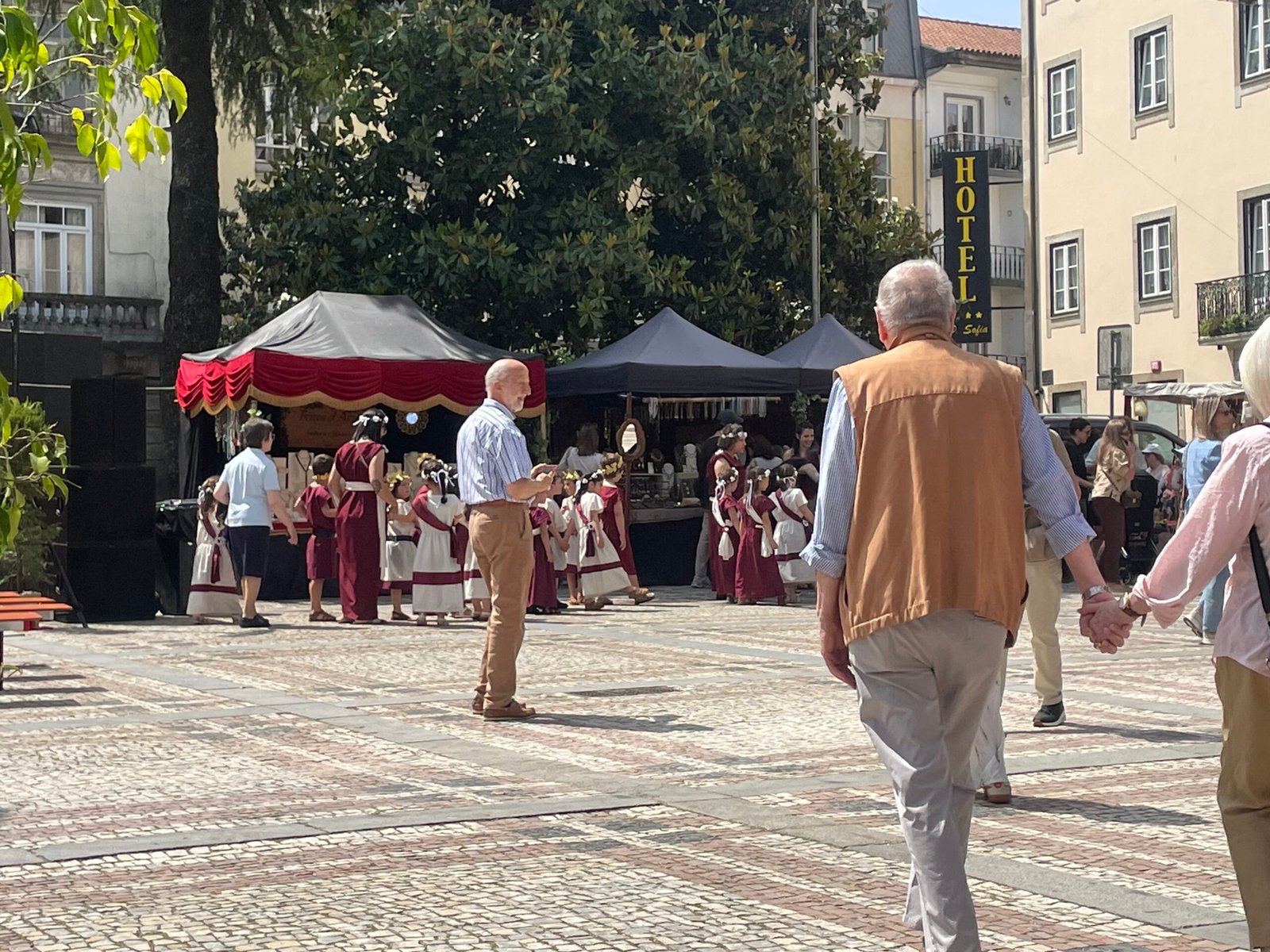
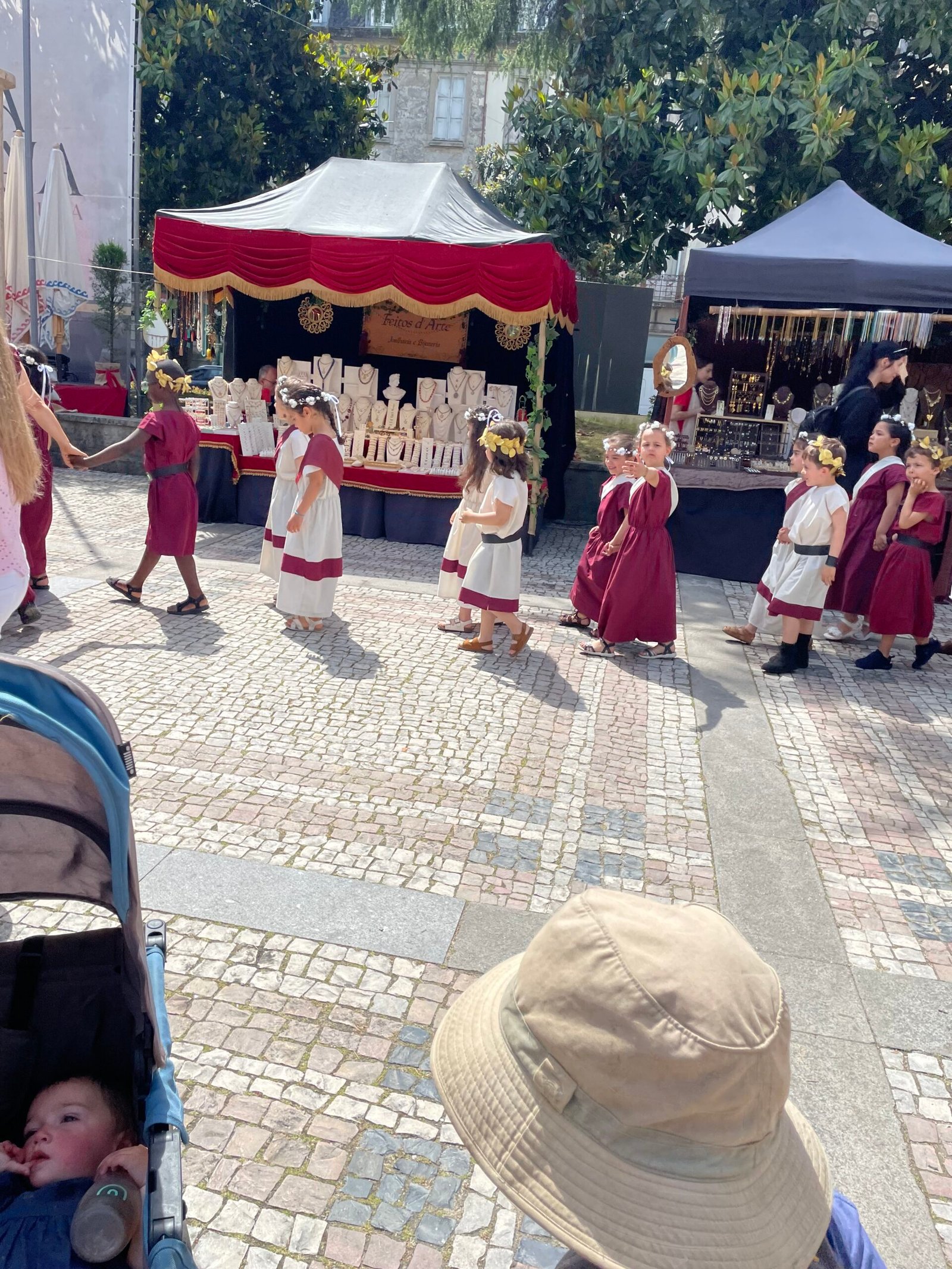
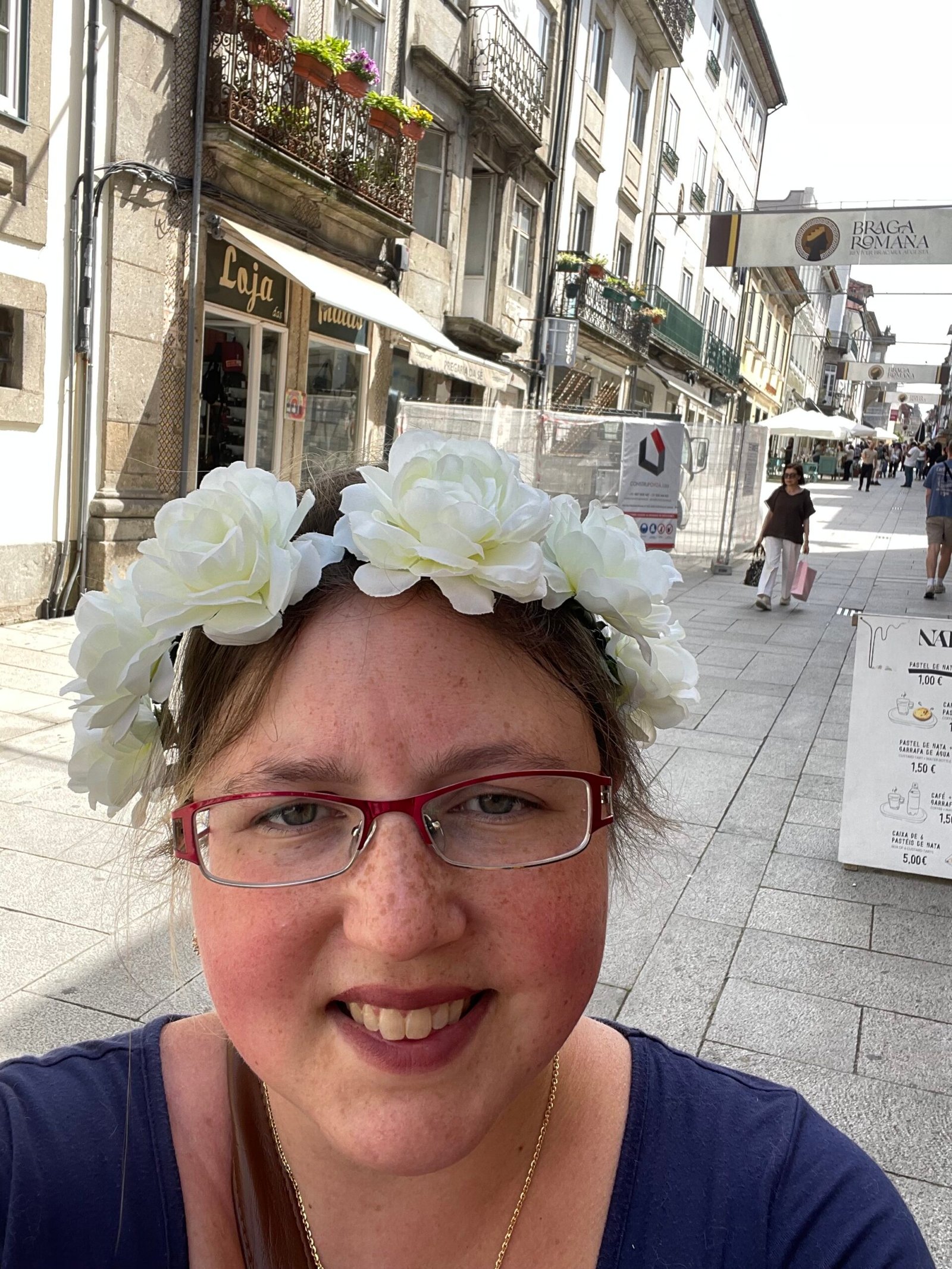
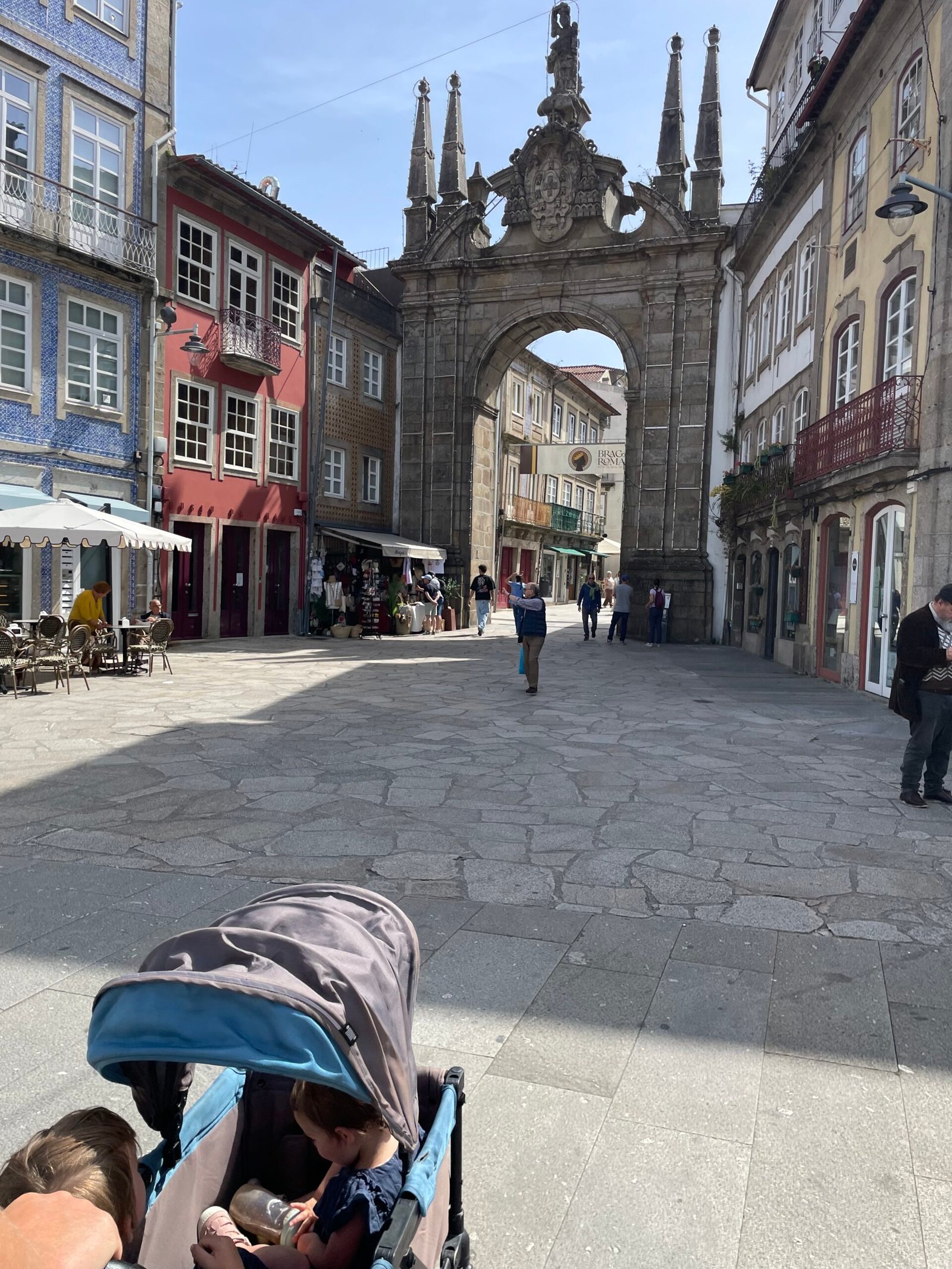
Once we reached the historic district and found parking (which was no easy feat), we wrestled our wagon out, slathered up with sunscreen, and set out for fun. You’re in no doubt you’re entering an area with a magnificent past, as a three-story stone arch looms over you as you walk the cobbled streets, the feminine figure crowning the arch looking down at you with a stately reserve. As you walk along, almost every store and salon, cafe and boutique are selling big and small flower crowns of every color. Business signs are covered with banners in latin script. A clothier has togas and robes modeled by their window mannequins, instead of the usual suits. Of course, waiters and patrons and locals are dressed in loose, short tunics or long, flowing robes. Groups of schoolchildren are led by in rows, wearing togas with different color sashes to represent their school colors. Somewhere nearby someone is playing a lute. Shops are advertising Roman cuisine, from spiced roasted nuts all the way up to a suckling pig with an apple in its mouth! Everything smelled amazing.
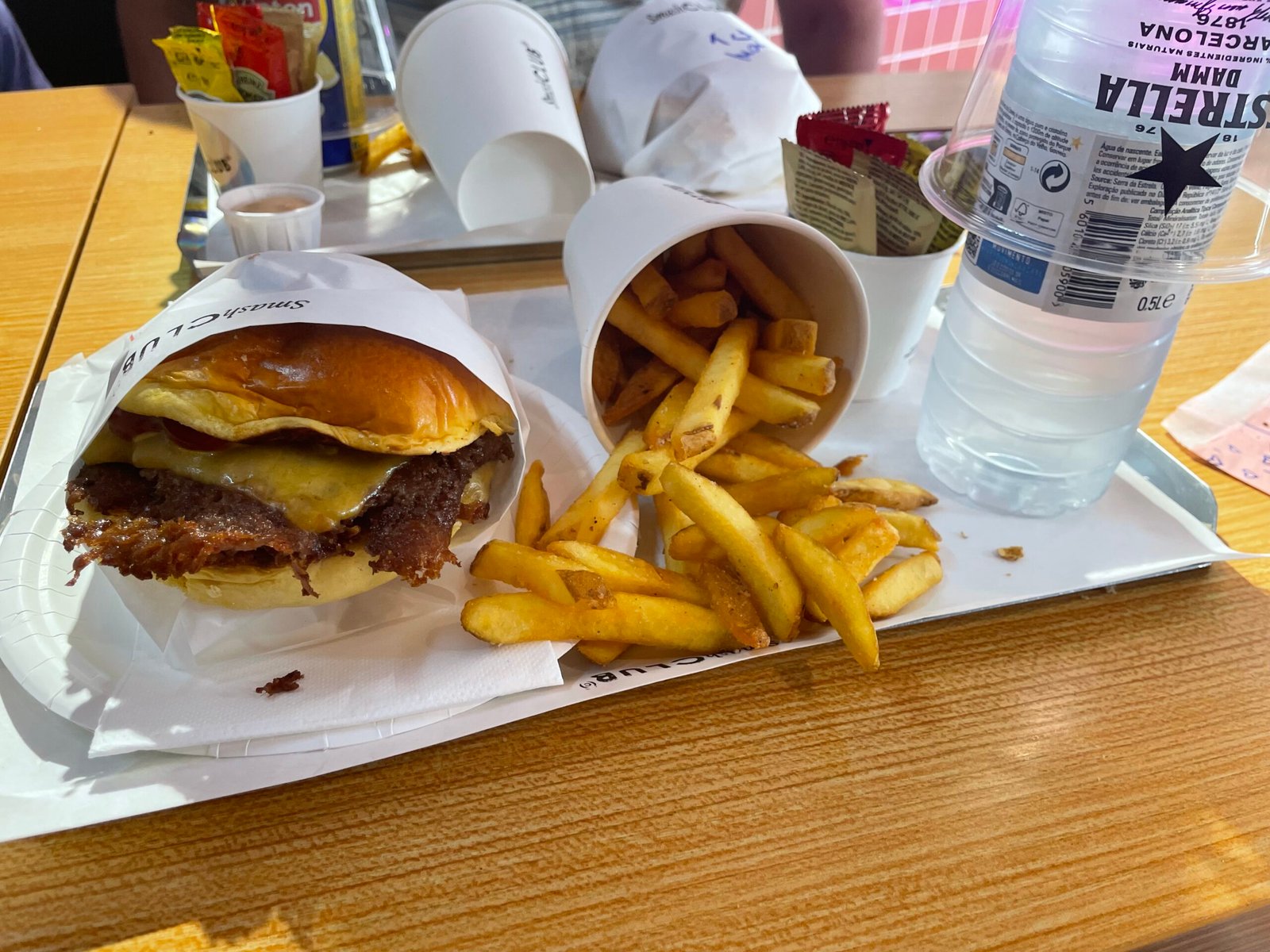
And we got smash burgers. I regret nothing because they were absolutely delicious and I would get them again in a heartbeat! Our friends recommended SmashClub Burgers, just beyond the arch, and I snarfed mine almost as fast as Jack. If you’re ever in Braga, I’d recommend the Original Smashburger, as it’s just…chef’s kiss.
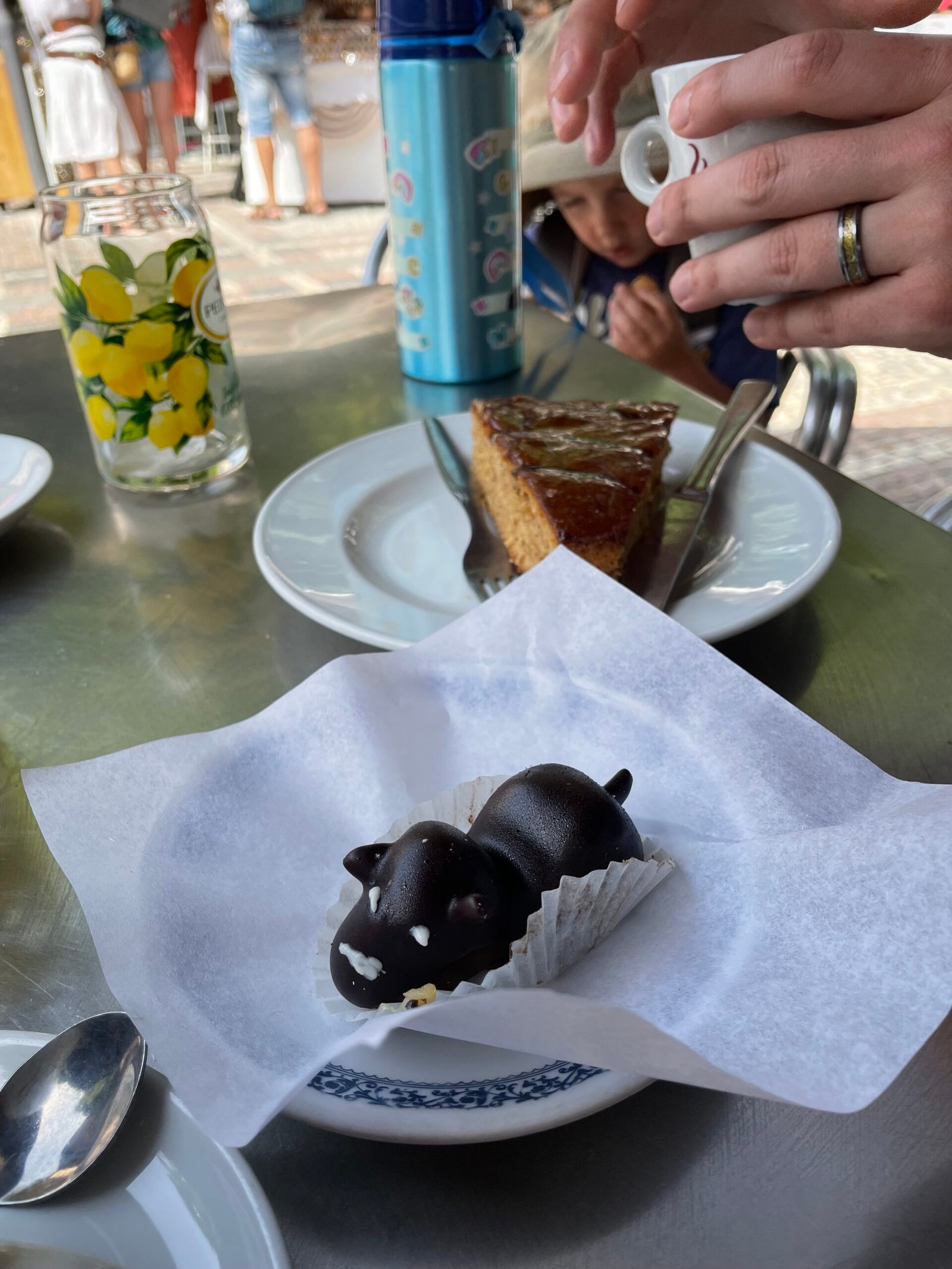
Speaking of culinary treats, I can’t forget the Ginjinha de Obidos! Braga is famous for the marvelous cherries grown in the area. One of the chief uses for the cherries is a cherry liqueur, tasting of sweet and sour varieties and sometimes brewed with cinnamon or vanilla. It’s common to find shots of this liqueur served in a dark chocolate cup, like an open-topped, alcoholic Reeses cup. I’d been told that they’re quite touristy but we still had to try them out! They were really tasty, and, at €1 per chocolate cup, it was worth it.
Then we got back to sight-seeing. We wandered around an architectural museum until the children got antsy, then went back to join the throng watching musicians and dancers and shopping in the colorful kiosks that lined the streets. There were some amazing handicrafts for sale–Damascus knives, hand-stitched wallets, blown-glass jewelry. There were also some products I’m fairly sure were drop-shipped from Temu, but who cares? We had the privilege of catching a show, where folks from a local dance troupe showed the crowd their moves in Middle Eastern dances and costumes. Here’s a short video of the dances below:
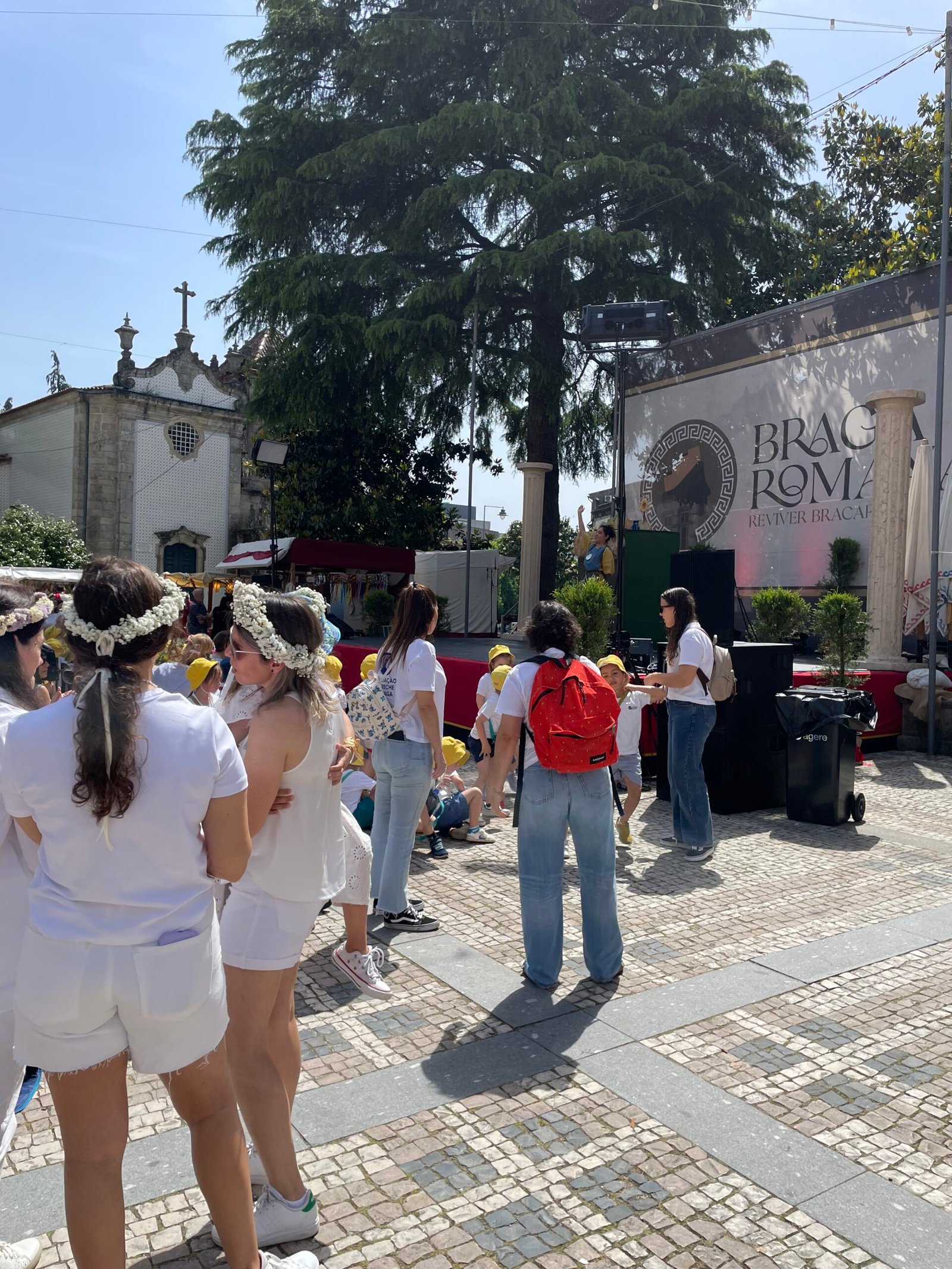
Our children were fascinated by all the color and costumes and music, but the sun eventually became too intense to ignore. Braga’s winding, narrow streets seemed to hold the heat until we were all sweating and trying to find shade. I was quite keen to stay for a performance dedicated to the Terpsichore, ancient muses of dance. I could see several young ladies in masks off to the side of the platform, holding lyres, horns, and streamers. But baby F hadn’t had her nap yet and was getting restless. Reluctantly we headed back to our car, pausing to greet a very friendly German Shepherd.
Overall, I would rate the Braga Romana a solid 8/10. It reminded me of the best parts of the Renn Faires I’ve attended, with shopping, themed treats, and costumes. Depending on when you go, you can see recreations of a Roman wedding, a parade, a gladiator fight, and lots of other cool demonstrations, but a lot of these take place at night and we have small children with early bedtimes. Even though we only got to stay a few hours, I thoroughly enjoyed myself. The only downside was the heat. I hope to go again next year, and maybe I’ll splurge for a robe for myself! Maybe we’ll see you there too.
Ciao-ciao!
2 Comments
What a well written and well researched post! Thank you for taking us along as you immerse yourselves in all that Portugal has to offer.
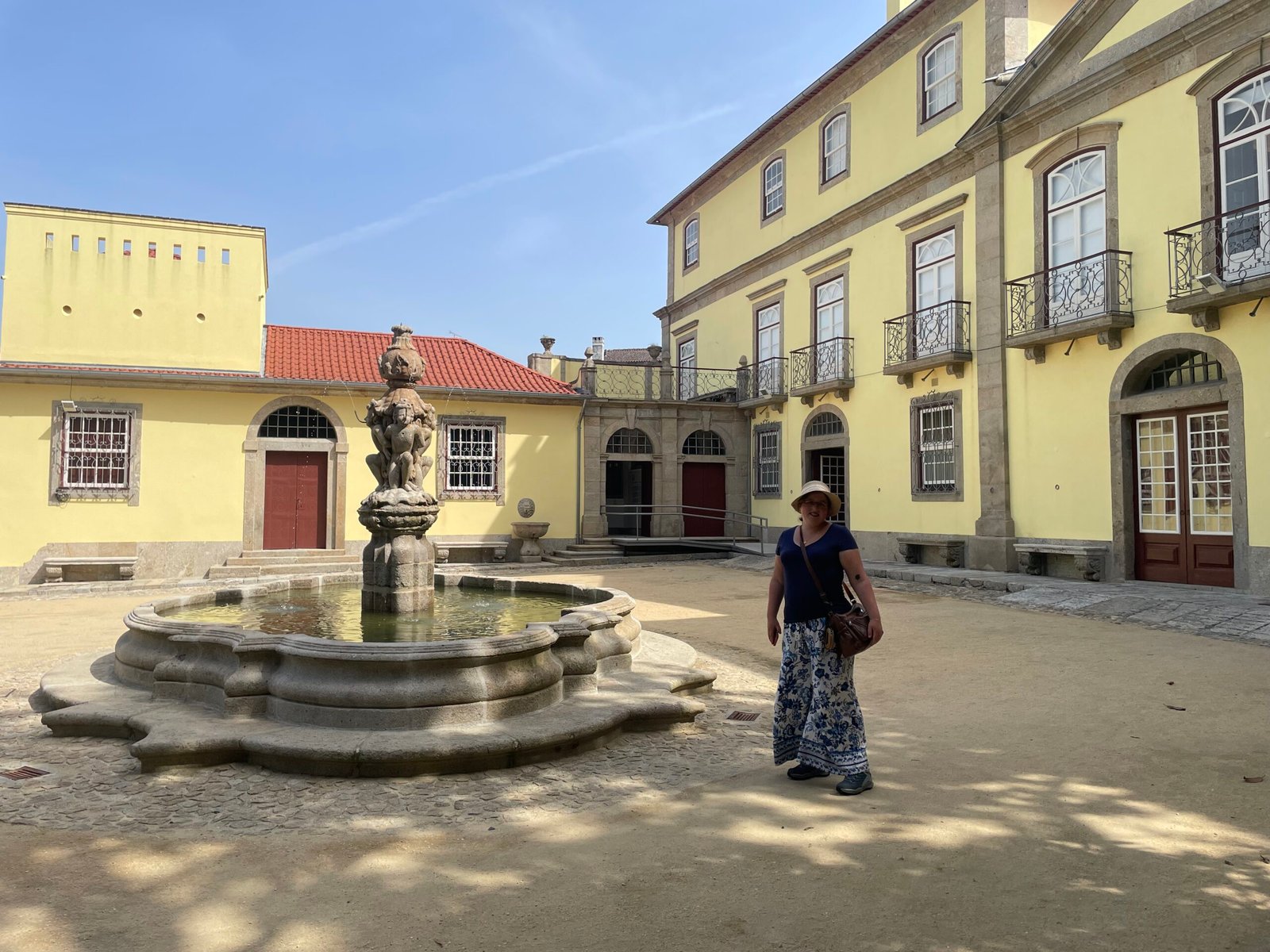
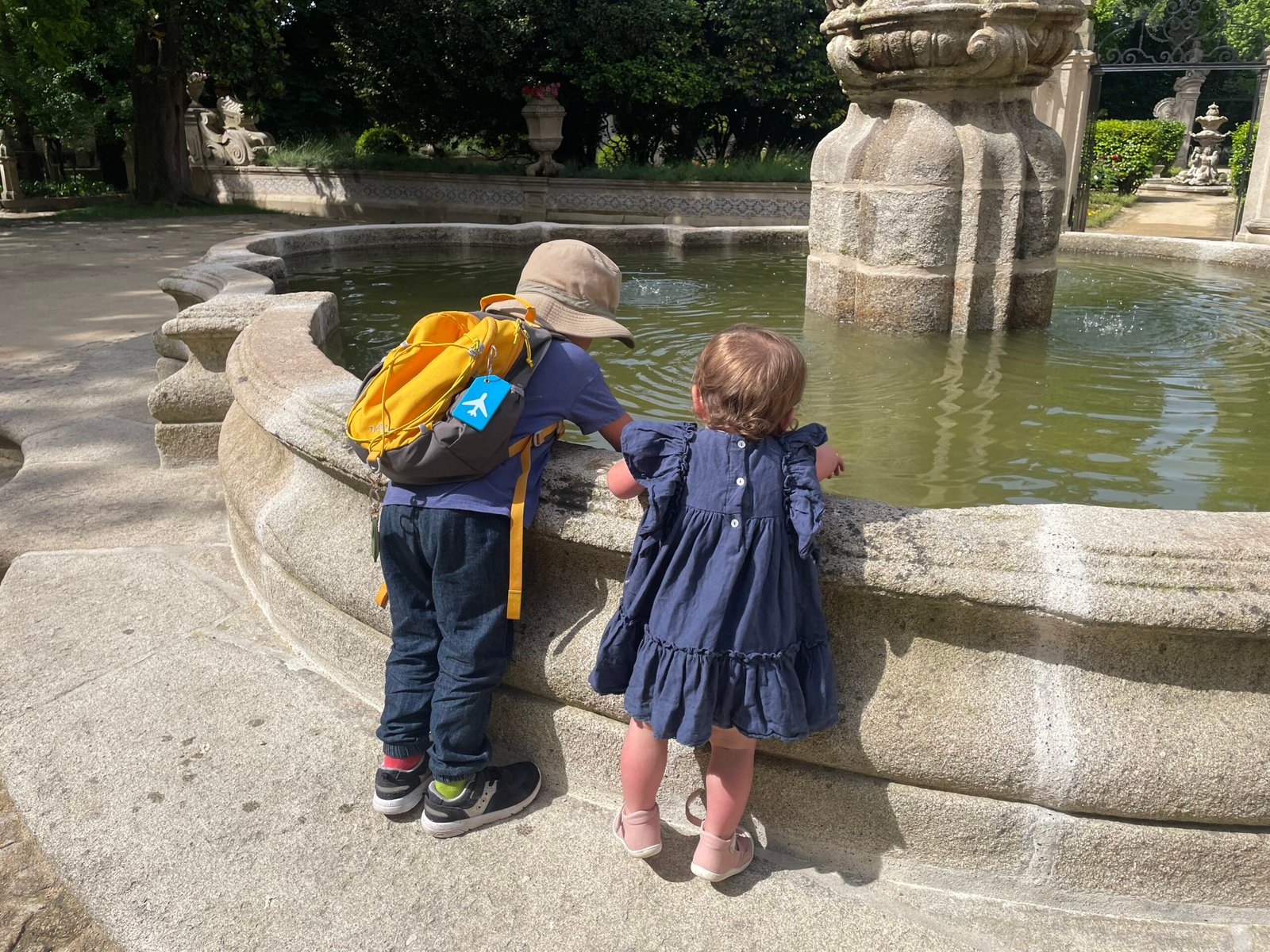
I loved seeing F standing (!) at the fountain with big brother 💙.
I loved reading about this history and your family’s adventures! It’s always nice to learn about the events you’re attending. I think one gets more out of it if they know the background behind an event.